Essential Features to Look for in Delivery Tracking Software
Anita
July 1, 2026
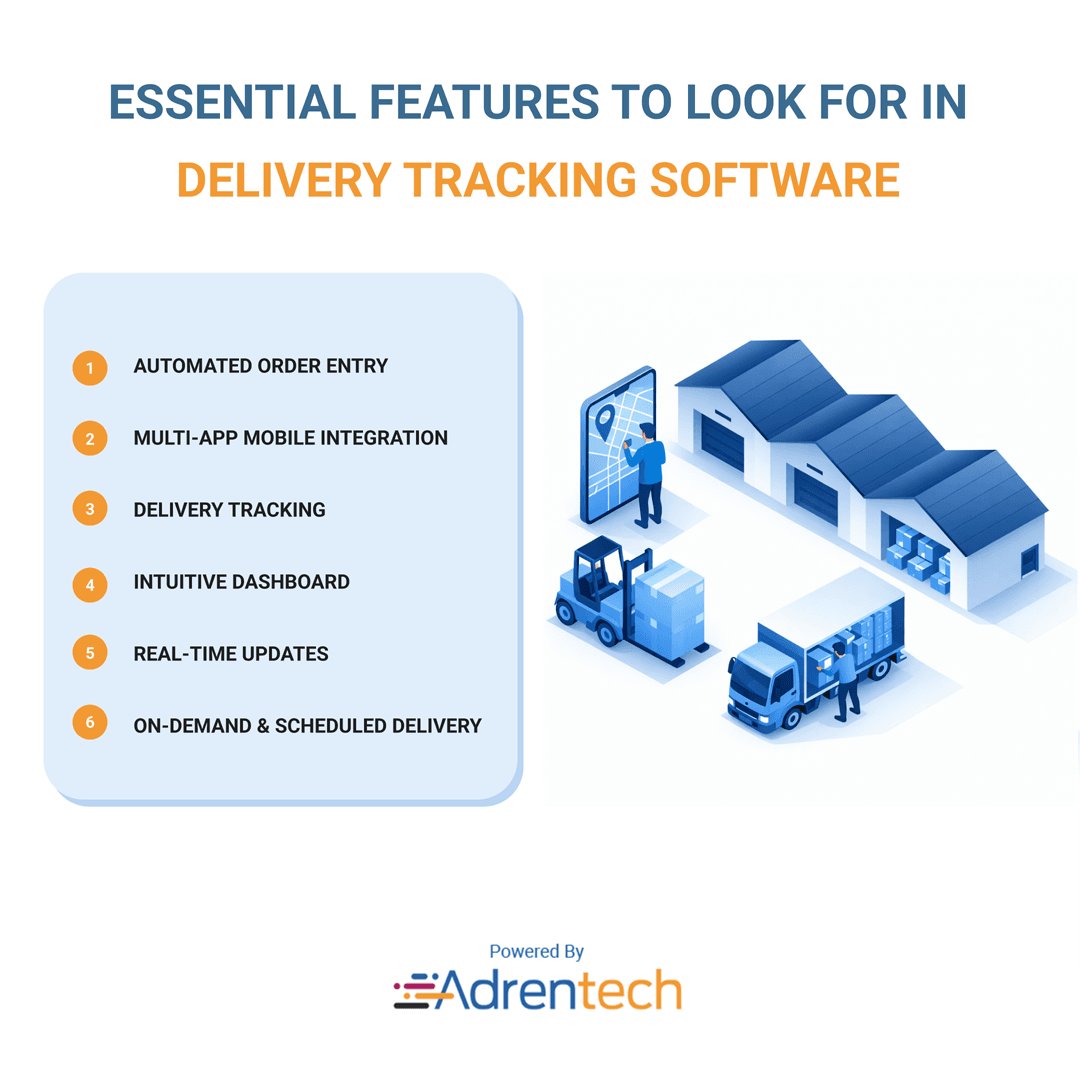
Table of Contents
- Introduction
- Why Delivery Tracking Matters More Than Ever
- Core Features Every Delivery Tracking Platform Should Offer
- Multi-Carrier Integration
- Accurate Real-Time Tracking
- Unified Order Tracking Experience
- Automated Delivery Notifications
- Visibility Across Domestic and International Shipping
- Tracking Data That Improves Operations
- Security and Customer Confidence
- Enhancing the Customer Experience Beyond Tracking
- Integration with Your Existing E-commerce Platform
- Scalability for Growing Businesses
- Analytics That Drive Better Decisions
- Choosing Software That Supports Future Growth
- Conclusion
- Frequently Asked Questions
Essential Features to Look for in Delivery Tracking Software
Introduction
The moment a customer completes a purchase, the shopping experience enters its most critical stage. While product selection and payment influence buying decisions, the delivery experience often determines whether someone will return for another order. Customers expect to track every package, receive timely updates, and know exactly when it will arrive.
Today's buyers rarely wonder if a shipment will arrive—they expect visibility throughout the journey. Whether they're waiting for a small parcel or a large freight delivery, they want immediate access to tracking information, accurate delivery status, and proactive notifications if anything changes.
For online retailers, this expectation creates both an opportunity and a challenge. The right delivery tracking software doesn't just help customers monitor a shipment. It also reduces support tickets, improves operational efficiency, and gives businesses valuable insights into their entire logistics process.
In this guide, we'll explore the essential capabilities every modern tracking platform should provide and how they help e-commerce businesses build a better post-purchase experience.
Why Delivery Tracking Matters More Than Ever
Every successful e-commerce business eventually discovers the same truth: customers remember how a product was delivered just as much as the product itself.
If a buyer cannot track their package, locate their tracking number, or understand the latest tracking status, frustration grows quickly. Many customer service inquiries begin with a simple question:
"Where is my order?"
A modern delivery tracking solution answers that question automatically.
Instead of contacting support, customers can use a web portal or mobile app to track shipments, view tracking events, and receive notifications whenever their shipment moves between facilities or reaches a new destination.
This transparency benefits everyone involved.
Customers gain confidence because they always know where their item is.
Retailers reduce inbound support requests.
Logistics teams spend less time manually checking carrier websites.
Even the seller benefits from fewer delivery disputes and improved customer satisfaction.
Whether shipping within the United States or internationally, visibility has become an expected part of the buying experience rather than a premium feature.
Core Features Every Delivery Tracking Platform Should Offer
Not all delivery tracking software is built the same. Some solutions simply display a carrier page, while others become the central hub for managing every shipment from dispatch to successful package delivery.
Here are the capabilities worth prioritizing.
Multi-Carrier Integration
Most growing businesses work with more than one carrier.
A customer may receive one order through USPS, another via DHL, while larger purchases travel using FedEx Ground and FedEx Express. International merchants often add regional partners to support global shipping and local last-mile providers.
Your tracking platform should consolidate updates from every provider into one interface instead of forcing teams to switch between multiple websites.
Support for major providers including FedEx, DHL, USPS, and other tracking services ensures customers enjoy a consistent experience regardless of who handles the delivery.
Accurate Real-Time Tracking
Customers don't simply want updates—they expect them instantly.
Real-time tracking events provide confidence that a shipment is moving through the network. Each scan should automatically update the latest location, estimated arrival, and current status.
Reliable tracking also helps businesses identify delays before customers complain.
When software continuously monitors shipment progress, operations teams can react early instead of waiting for missed delivery promises.
Unified Order Tracking Experience
Many online stores still redirect buyers to external carrier websites.
A better approach is offering branded order tracking directly from the retailer's website.
Customers enter their tracking number, reference code, or shipment ID to instantly access current progress.
This creates a smoother experience while keeping shoppers engaged with your brand instead of sending them elsewhere.
For businesses processing hundreds of daily orders, centralized visibility also makes bulk shipment management significantly easier.
Automated Delivery Notifications
Customers appreciate communication—but only when it's useful.
Modern delivery tracking software should automatically update customers whenever meaningful changes occur, including:
- Order shipped
- Out for delivery
- Delivery delayed
- Package delivered
- Exception requiring action
These notifications reduce uncertainty while lowering inbound support requests.
Instead of contacting customer service, buyers remain informed throughout the journey.
Visibility Across Domestic and International Shipping
As online businesses expand, shipping becomes increasingly complex.
A retailer may ship domestic orders locally while also serving customers internationally through several logistics partners.
Without centralized tracking, every shipment follows a different process.
Good delivery tracking software provides one dashboard for every shipment, whether it's local, cross-border, or part of global package tracking.
This becomes particularly valuable for businesses managing customs processing, multiple warehouse locations, and international fulfillment partners.
The ability to follow shipments worldwide improves planning while helping customers understand estimated arrival times regardless of location.
Tracking Data That Improves Operations
Tracking software shouldn't only display where a shipment is today.
It should also generate valuable business intelligence.
Historical tracking data helps companies identify recurring delays, evaluate provider performance, compare delivery rate metrics, and optimize future shipping decisions.
Patterns often emerge quickly.
One warehouse may consistently process orders faster.
Certain routes may experience seasonal delays.
Specific carriers may perform better for Express deliveries while others excel with economy shipping.
These insights help businesses continuously improve delivery performance instead of simply reacting when issues occur.
Security and Customer Confidence
Customers share sensitive information during checkout, including addresses, contact details, and zip codes.
That makes security an essential consideration when choosing delivery tracking software.
The best platforms protect customer information while allowing recipients to access shipment details without exposing unnecessary personal data.
Secure authentication, encrypted tracking pages, and permission-based access all contribute to higher customer confidence.
For businesses handling thousands of shipments every month, protecting delivery information is just as important as protecting payment data itself.
Enhancing the Customer Experience Beyond Tracking
Tracking software has evolved far beyond showing a package's location on a map. Today's leading platforms create a complete post-purchase experience that keeps customers informed from the moment an order is confirmed until the package arrives safely at its destination.
Look for software that combines shipment visibility with proactive communication. Estimated delivery windows, branded notifications, personalized messaging, and self-service tracking portals all contribute to a smoother experience.
Customers also appreciate flexibility. If a delivery location needs to change or a recipient's schedule changes, the ability to adjust delivery preferences without contacting support creates a far better experience than requiring manual intervention.
For retailers, these capabilities translate directly into higher satisfaction scores, fewer support requests, and stronger customer loyalty.
Integration with Your Existing E-commerce Platform
Even the most advanced tracking software has limited value if it cannot connect with the systems you already use.
A modern solution should integrate with your existing e-commerce platform, warehouse management system, order management software, and shipping providers without requiring complex development work.
Popular platforms such as Shopify, WooCommerce, Magento, BigCommerce, and even marketplaces like Amazon increasingly rely on automated integrations to synchronize order data.
Once an order is created, tracking information should flow automatically between systems without manual updates.
This eliminates duplicate work while reducing human error throughout the fulfillment process.
Scalability for Growing Businesses
Many companies choose delivery software based on today's shipping volume instead of tomorrow's.
That often becomes an expensive mistake.
Whether you're shipping dozens of packages each week or thousands every day, the software should scale alongside your business.
Features such as automated workflows, API connectivity, bulk shipment management, reporting dashboards, and intelligent routing become increasingly valuable as order volumes grow.
A scalable platform also allows businesses to onboard new logistics partners quickly without redesigning existing processes.
Analytics That Drive Better Decisions
Every shipment generates valuable operational data.
Instead of simply displaying delivery progress, the best tracking platforms convert this information into actionable insights.
Analytics dashboards can help businesses answer questions such as:
- Which carrier delivers most reliably?
- Which shipping methods experience the highest delay rate?
- How long does each fulfillment center take to dispatch orders?
- Which regions generate the most delivery exceptions?
- How often do customers check their tracking page?
These insights allow operations teams to continuously improve fulfillment performance rather than simply reacting to problems after they occur.
Choosing Software That Supports Future Growth
Technology continues to reshape logistics.
Artificial intelligence, predictive delivery estimates, automated exception handling, and real-time analytics are quickly becoming standard capabilities rather than premium features.
Businesses investing in delivery tracking software should look beyond today's requirements and consider where their operations will be two or three years from now.
Flexible integrations, automation capabilities, and configurable workflows ensure the platform continues supporting future expansion instead of becoming another system that eventually requires replacement.
Solutions like Inform from Adrentech extend this visibility even further by combining shipment tracking insights with customer interactions, support analytics, and operational intelligence. Rather than viewing deliveries in isolation, businesses gain a broader understanding of how logistics performance influences customer experience and contact center activity.
Conclusion
Delivery tracking is no longer simply a convenience—it's an essential component of modern e-commerce.
Customers expect complete visibility from purchase through final delivery, while businesses need accurate data to optimize logistics, improve efficiency, and reduce operational costs.
The right software should do far more than display a package's location. It should centralize tracking across carriers, automate customer communication, provide meaningful analytics, strengthen security, and scale alongside business growth.
When evaluating delivery tracking solutions, focus on platforms that simplify operations while creating a transparent, reliable experience for every customer.
As customer expectations continue to rise, businesses that invest in modern delivery tracking technology will be better positioned to improve retention, reduce support costs, and build long-term trust.
Frequently Asked Questions
What is delivery tracking software?
Delivery tracking software helps businesses and customers monitor shipments throughout the shipping process. It gathers tracking information from carriers, displays shipment progress, and provides automated notifications until delivery is complete.
Why is real-time tracking important?
Real-time tracking reduces uncertainty, improves customer satisfaction, and enables businesses to identify delays before they become larger service issues.
Can delivery tracking software work with multiple carriers?
Yes. Most modern solutions support multiple shipping providers, allowing businesses to track packages from FedEx, DHL, USPS, and many regional or international carriers through a single dashboard.
How does delivery tracking reduce customer service inquiries?
Customers can access shipment updates themselves instead of contacting support. Automated notifications and self-service tracking pages answer many common delivery questions before they become support tickets.
What should businesses consider when selecting delivery tracking software?
Look for software that offers multi-carrier support, automation, analytics, secure customer data handling, easy integrations, scalability, and branded tracking experiences. These capabilities help improve both operational efficiency and customer satisfaction while supporting future business growth.
Share on social media



Top Metrics to Track for AI Knowledge Base Performance