Reducing Support Tickets with an Optimized Knowledge Base
Anita
June 15, 2026
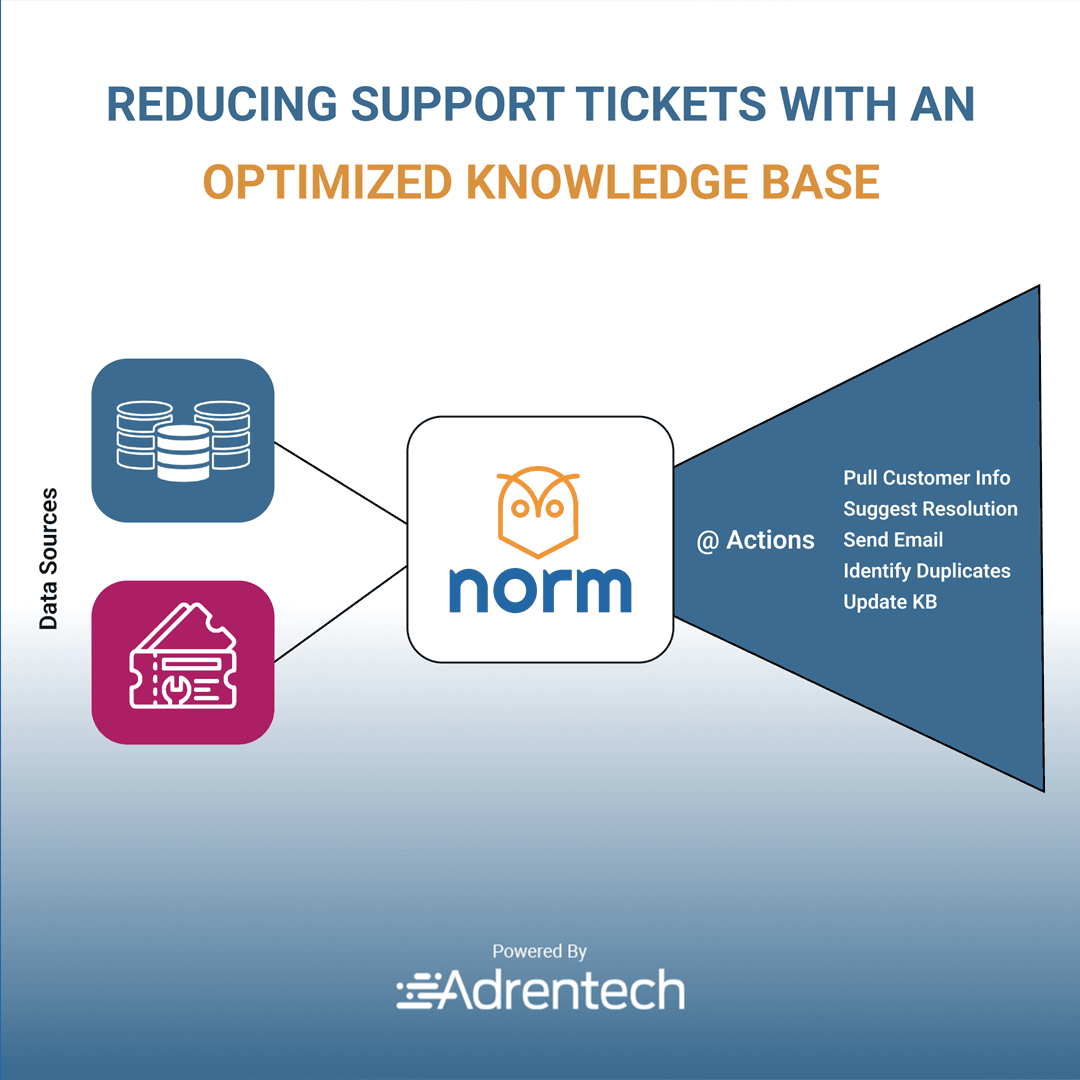
Table of Contents
- Most support teams don't actually have a staffing problem
- We had the article. The customer still opened a ticket.
- Customers don't search using your terminology
- The hidden cost of knowledge gaps
- Search is usually the problem, not the documentation
- What changes when AI enters the picture
- Why some knowledge bases become harder to use over time
- Internal knowledge deserves the same attention
- Can AI create and improve content automatically?
- Final thoughts
A support director once described their help center in a way that's difficult to forget.
"We have thousands of articles," they said. "The problem is that nobody can find them."
It sounds almost ridiculous.
How can a company invest years building documentation and still struggle with support volume?
Yet it happens all the time.
Support tickets keep arriving. Agents answer the same questions repeatedly. Customers become frustrated. Meanwhile, the answer is already sitting somewhere in the knowledge base.
That's the part many organizations miss.
The issue often isn't missing information.
It's access to information.
Most support teams don't actually have a staffing problem
When ticket volume starts climbing, hiring feels like the logical solution.
More tickets should mean more agents.
Sometimes that's true.
More often, though, companies discover that additional headcount only solves the problem temporarily.
The queue shrinks.
A few weeks pass.
Then everything starts growing again.
A customer can't locate billing instructions.
Another is looking for service activation steps.
Someone else knows they've seen the answer before but can't remember where.
Three different situations.
Three support tickets.
The common thread isn't product complexity. It's discoverability.
Knowledge management rarely feels urgent when documentation is small. Once hundreds or thousands of articles exist, things change quickly.
That's when organizations start realizing that customer support and knowledge management are deeply connected.
We had the article. The customer still opened a ticket.
One of the most common misconceptions is that support tickets happen because information doesn't exist.
In reality, many tickets are generated despite the answer being available.
Think about your own behavior.
You search.
You skim a few results.
Maybe you open two or three articles.
If nothing looks promising after a couple of minutes, you stop searching.
Customers do exactly the same thing.
The difference is that their next step is usually contacting support.
This creates a strange situation.
Support agents spend time answering questions that have already been documented.
Meanwhile, customers wait for answers that could have been available instantly.
A knowledge base is a centralized source of information. That alone isn't enough.
The information must be easy to discover.
Otherwise the knowledge base becomes little more than a storage system.
Customers don't search using your terminology
Here's something support teams learn quickly.
Customers don't use internal company language.
A product team may call something "authentication credential recovery."
A customer calls it:
"Why can't I log in?"
Humans understand these phrases describe the same issue.
Traditional knowledge base software often doesn't.
This is one reason conventional knowledge bases struggle as content grows.
The content itself may be perfectly accurate.
The search experience isn't.
A modern AI knowledge base approaches the problem differently.
Instead of relying entirely on keywords, it uses natural language processing and machine learning to understand intent.
That distinction matters more than many people realize.
Customers don't want to learn your terminology.
They want answers.
The best AI-powered search experiences adapt to the language users already use.
The hidden cost of knowledge gaps
Some support tickets are caused by poor search.
Others are caused by missing content.
These gaps are surprisingly expensive.
A customer searches for an answer.
Nothing useful appears.
Support receives a ticket.
An agent investigates the issue.
The same question appears again next week.
And again the week after.
At scale, those small inefficiencies become significant.
Knowledge gaps affect more than ticket volume.
They influence customer experience, agent productivity, onboarding, and even customer satisfaction.
Organizations often underestimate how much time support teams spend compensating for missing documentation.
The challenge becomes even bigger when internal knowledge is fragmented across departments.
Marketing has one version.
Operations has another.
Support teams rely on a third.
Eventually nobody is entirely sure which information is correct.
This is why knowledge management systems increasingly focus on maintaining a single source of truth.
Search is usually the problem, not the documentation
When companies decide to improve self-service, they often begin by creating more content.
That feels sensible.
Unfortunately it doesn't always work.
Imagine adding another thousand articles to a help center that already has poor search capabilities.
Customers don't suddenly find answers faster.
They simply have more content to navigate.
Many organizations discover that search quality has a greater impact on ticket reduction than content volume.
AI-powered search works differently from traditional systems.
Instead of matching exact words, an AI system evaluates meaning, context, previous user interactions, and related topics.
A user searching:
"How do I update my payment details?"
should receive relevant information regardless of how the article title is written.
That sounds obvious.
Yet countless support tickets exist because traditional search systems still struggle with exactly this problem.
What changes when AI enters the picture
A lot of discussion around AI focuses on automation.
That's only part of the story.
The biggest benefit of an AI-powered knowledge base is often understanding.
Artificial intelligence helps computers understand human language more effectively.
Machine learning algorithms learn from data.
NLP allows systems to interpret intent.
Together, these technologies make AI knowledge bases significantly more useful than many older platforms.
The best AI-powered knowledge base solutions don't simply return documents.
They surface relevant information.
Some personalize results based on user interactions.
Others identify content based on user behavior.
More advanced systems analyze customer queries to uncover recurring problems before support teams notice them.
That's where things start getting interesting.
The knowledge base stops being a static library.
It becomes an active participant in customer support.
Why some knowledge bases become harder to use over time
Ironically, success can create new problems.
As organizations expand, documentation grows.
More products.
More services.
More workflows.
More articles.
Without strong knowledge management practices, even the best help center can become difficult to navigate.
The issue isn't usually content quality.
It's complexity.
An article written three years ago may still exist.
A newer version may exist too.
Users may find both.
Now they're unsure which one to trust.
This is where AI-driven knowledge management provides value.
AI can identify outdated content, duplicate articles, and inconsistent information.
Instead of manually reviewing thousands of documents, support teams receive guidance about where attention is needed.
That makes maintaining knowledge bases far more realistic at scale.
Internal knowledge deserves the same attention
Most discussions focus on customer-facing documentation.
Internal knowledge is just as important.
Sometimes more.
Imagine a new support agent joining the team.
They need product knowledge.
Process documentation.
Troubleshooting guides.
Policy information.
Without an internal knowledge base, they spend hours asking colleagues for help.
Multiply that across dozens or hundreds of employees.
The productivity cost becomes obvious.
An internal knowledge base helps teams access the knowledge base quickly and consistently.
Internal knowledge sharing improves onboarding, reduces dependency on tribal knowledge, and creates more consistent customer experiences.
Organizations often invest heavily in customer-facing content while neglecting internal knowledge.
That rarely ends well.
Can AI create and improve content automatically?
To a degree, yes.
This is where generative AI becomes particularly useful.
Modern AI knowledge base software can identify knowledge gaps, recommend new topics, and even automatically generate content drafts.
Human review still matters.
Probably always will.
But AI can dramatically accelerate content creation.
Some organizations already use AI-powered knowledge management systems to analyze customer feedback, monitor search behavior, and improve relevant content continuously.
Platforms such as Adrentech norm take a similar approach by combining AI-powered search, internal knowledge, workflows, and knowledge sharing into a unified environment.
The goal isn't replacing experts.
The goal is helping experts spend less time maintaining documentation and more time improving it.
Final thoughts
A few years ago, most companies could get away with a messy help center.
Today they can't.
Customers expect answers immediately. If they don't find them, they contact support.
That's why reducing support tickets is no longer just a customer support challenge.
It's a knowledge management challenge.
The organizations seeing the biggest improvements aren't necessarily creating more content.
They're making existing knowledge easier to discover.
Through AI-powered search, machine learning, natural language processing, and better knowledge management practices, companies can reduce ticket volume, improve customer experience, and help support teams focus on problems that genuinely require human expertise.
In many cases, the answer was already there.
The real challenge was helping people find it.
Share on social media



Essential Features to Look for in Delivery Tracking Software