Call Center Evaluation Form: Why It’s Essential for Improving Agent Performance
Anita
January 23, 2026
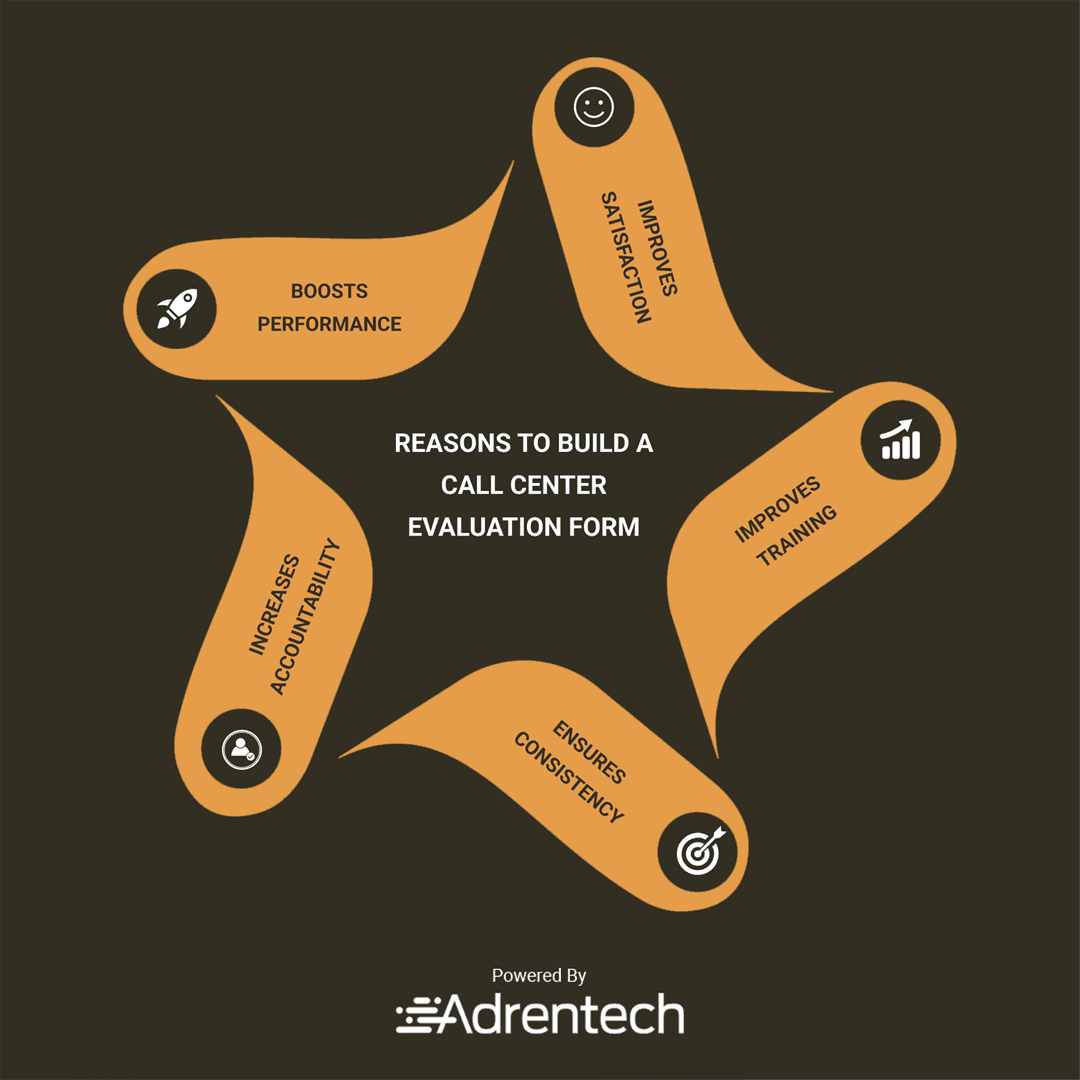
Call Center Evaluation Forms: How to Measure and Improve Agent Performance
We have spent years working with call center teams, contact center managers, and executives who are trying to answer the same uncomfortable question: are we really measuring what matters? Call center evaluation forms are often treated as a checkbox exercise. We fill them out, score every call, archive the results, and move on. But when done right, a call center evaluation form becomes a practical framework to assess agent performance and improve customer experience at the same time.
In this article, we share how we think about call center evaluation, what an effective evaluation system should include, and how modern tools like the Adrentech Inform executive summary tool help leaders turn raw evaluation data into clear insights. We write in first person plural because this approach was shaped by real projects, mistakes, and lessons learned across different call center operations.
Why call center evaluation forms still matter
A call center handles thousands of customer calls every week. Every call is a customer interaction that can either strengthen or damage customer satisfaction. Without a structured way to evaluate performance, decisions are made based on anecdotes and gut feeling. That is risky, especially in high call volumes where patterns are hard to spot.
Call center evaluation forms give structure to monitoring and evaluation. They allow call center managers to evaluate the performance of agents consistently, even when teams grow fast. When we use evaluation forms correctly, we create a shared language around call quality, service quality, and customer expectations.
Call center quality assurance depends on repeatable processes. An evaluation form helps us evaluate every call against the same call quality standards. That consistency is crucial for maintaining service quality across shifts, locations, and contact center agent teams.
What a call center evaluation form should really measure
Many evaluation forms focus too heavily on scripts and checklists. While compliance matters, agent’s performance is more complex than reading lines correctly. A strong call center evaluation form balances structure with judgment.
We usually divide an agent evaluation form into a few core areas:
First, call quality. This includes tone, clarity, listening skills, and how well the call center agent builds rapport. Call quality monitoring is not about sounding perfect. It is about sounding human and helpful during customer service calls.
Second, problem resolution. First call resolution rates are one of the most important performance metrics in any contact center. If customers need to call back, something in the process or the agent performance is broken. Evaluating first call resolution helps improve customer satisfaction and reduce costs.
Third, process adherence. This is where call center compliance, data protection, and required disclosures live. We still need to evaluate these areas, but they should not dominate the entire evaluation experience.
Fourth, customer experience signals. Did the agent understand customer expectations? Did they actively try to improve customer outcomes? These elements are harder to score, but they are essential for effective call center performance.
How to evaluate agent performance without killing morale
One of the biggest risks of call center evaluation is demotivation. If evaluation feels punitive, it hurts agent productivity and damages trust. We have seen teams where call scoring became a fear-based system instead of a learning tool.
To improve agent performance, evaluation and feedback must be connected. After we evaluate agent performance, we need to explain why scores look the way they do. Evaluation forms should help agents, not trap them.
We recommend sharing evaluation results regularly, not only when something goes wrong. Positive feedback boosts agent morale and reinforces best practices. Even small wins in effective call handling should be visible.
Call monitoring should also be transparent. Agents should know what is being monitored and why. A clear call monitoring checklist reduces anxiety and sets fair expectations.
The role of quality monitoring in call centers
Quality monitoring is often misunderstood as pure control. In reality, quality monitoring is a learning system. Call quality monitoring, call recording reviews, and monitoring call samples give us insights on call patterns that individual agents cannot see on their own.
Call center quality monitoring works best when it is tied to performance management. Instead of isolated QA evaluation results, we look for trends. Are certain customer calls always escalating? Are some center agent performance issues linked to specific products or policies?
This is where data volume becomes a challenge. Evaluating call center performance manually works at small scale. As call center teams grow, leaders need summaries, not spreadsheets.
Turning evaluation data into executive insights
This is exactly the gap we built Adrentech Inform to address. Adrentech Inform is an executive summary tool designed to turn complex operational data into clear, decision-ready insights. Instead of drowning in raw call center evaluation data, executives get a structured overview of call center’s performance.
With Adrentech Inform, we aggregate evaluation form results, call center quality assurance data, and performance metrics into a single executive-level view. Leaders can quickly see how agent performance connects to customer satisfaction and overall contact center performance.
The tool does not replace evaluation forms. It makes them useful. Call center managers still evaluate calls, score interactions, and monitor agent performance. Adrentech Inform simply answers the question every executive asks: what should we do next?
Key performance indicators that actually help agents
Key performance indicators should guide action. Too many dashboards track everything and help no one. We focus on identifying key performance indicators that support effective performance management.
Examples include first call resolution, customer feedback trends, call quality scores, and average handling time when combined with service quality indicators. These KPIs help evaluate the performance of agents without reducing them to numbers.
When we align key performance indicators with evaluation forms, agent training becomes targeted. We stop guessing and start improving performance based on evidence.
Best practices for using evaluation forms consistently
Consistency is harder than it sounds. Different evaluators often score the same call differently. To avoid this, we recommend regular calibration sessions. Call center managers and QA teams should review customer calls together and align on scoring logic.
Using evaluation forms should also be documented. A clear framework to assess agent performance reduces subjectivity. This framework should explain how to evaluate call quality, customer interaction, and problem resolution.
Another best practice is limiting the size of evaluation forms. Long forms reduce focus. A shorter call evaluation form improves accuracy and evaluator attention.
Call center evaluation forms in high call volumes
High call volumes expose weak processes quickly. When pressure increases, inconsistent evaluation collapses. This is why evaluating call center operations under load is essential.
In high-volume environments, we recommend sampling strategically. Not every call needs full evaluation. Smart call monitoring focuses on risk areas, new agents, and unusual patterns.
Adrentech Inform supports this approach by highlighting anomalies in agent performance and call quality. Instead of reviewing everything, teams focus on what truly impacts customer experience.
Improving customer experience through better evaluation
Ultimately, evaluation exists to improve customer experience. When we improve agent performance, we improve customer outcomes. Effective evaluation systems link performance of agents directly to customer satisfaction scores.
Evaluation forms should always include room for qualitative notes. Numbers alone cannot capture the full context of customer interaction. Insights on call behavior often explain why scores move.
By connecting evaluation and feedback loops, monitoring and evaluation becomes continuous improvement, not policing.
Building an effective call center evaluation system
An effective evaluation system combines structure, fairness, and insight. It uses evaluation forms to monitor agent performance, quality management processes to ensure consistency, and executive tools to guide strategy.
Call center evaluation is not a one-time project. It evolves with products, customers, and teams. Regularly reviewing evaluation forms and performance metrics keeps the system relevant.
For us, the biggest shift was moving from isolated QA evaluation to shared understanding. Adrentech Inform plays a key role here by translating operational noise into executive clarity.
Final thoughts
Call center evaluation forms are essential for effective call center operations, but only when used with intention. They should help agents grow, help managers coach, and help executives make better decisions.
When evaluation focuses on improving call quality, supporting agents, and meeting customer expectations, everyone wins. With the right framework, tools, and mindset, call center evaluation becomes a driver of service quality, not a burden.
That is how we approach evaluating call center performance today, and it is how we help teams build better, more human contact centers.
Share on social media


Building an Internal Knowledge Base: Best Practices for Growing Teams in 2026